
Surf Life Executive Coaching
  • Home
  • Services
    • For Executives
    • For Architects & Designers
    • For Climate Leaders
    • For Soul Seekers
    • For Retreaters
  • About
    • About You
    • Benefits & Metrics
    • FAQ
    • About Me
  • Testimonials
  • Contact
    • Coaching Session Prep Form
    • Coaching Post Session Form
    • Post Engagement Coaching Check-In
  • Blog
  • Photos

Happiness Decoded:4 Neuroscience-Backed Strategies for Lasting Joy

5/16/2016

Comments


Unlock the Secrets to Transforming Your Emotional Well-Being Through Proven Scientific Techniques

Picture
Let’s start with morning rituals. In the past year-and-a-half, I developed a morning ritual consisting of meditation, journaling and consciously assessing on a scale of 1-10 how happy I wake up on that day (10 being completely blissed out to the max, and 0 at a basic level of hopelessness). This may seem excessive and even weird, I know. (Those of you who really know me know that I am a little weird anyway!)  But in the discipline of coaching, self care actually becomes a critical ally for being available and offering yourself at your highest level in service to your clients. That is the reason I focus on how I feel each morning so much. 
 
Anyway, the process has trained me to be more aware of how I’m feeling in the moment. It has helped me to reflect on the circumstances, relationships or events that made me choose that number on a daily basis. This self-reflection, along with spending the past 4 years constantly reading up on the latest neuroscience research on happiness, inspired me to share my insights about happiness. Why is it that so many people who seemingly have everything – a thriving business, millions of dollars in the bank, a seemingly stable relationship – still rank low on their happiness index? What REALLY makes us happy? How can we bring more happiness into our lives? 

 
1.  Understand that your brain is plastic
 
Neuroplasticity is, simply put, the brain’s ability to change over time. And studies show we do actually have a happiness set point. In other words, no matter how much tragedy or what happens to us, we go back to a set point of happiness. (It’s the reason why, for example, there is no real change in one’s happiness set point before they win the lottery vs. after they win.)

Psychology says there are a few things you can do to increase your happiness baseline – namely, focusing on gratitude and service. Similarly, research shows that meditation grows areas in our brain associated with positivity (left hemisphere) and compassion (right hemisphere), which can also increase our happiness set point. In my experience, it IS possible to re-wire your happiness set point, if even just to give it a slight increase. So, start with the belief in your own neuroplasticity. Actually, it’s not just a belief - it’s neuroscience! 

 
2.  Feel the lows in order to feel the highs
 
Some days I have woken up and felt like a 7 in terms of happiness and have thought, Hey, I’m doing pretty good today.  And then upon further reflection, that same morning I could also be in touch with a deep sadness about something. How can we be profoundly happy and at the same time profoundly sad about something? As self-awareness increases, our ability to identify and feel two perhaps very distinct feelings at once also becomes heightened.  We become more aware of our integration. The sadness doesn’t trump my happiness per se, but they both exist in me at the same time.
 
Brené Brown, the touted TEDX speaker, was spot-on in her famous Ted Talk on vulnerability when she pointed out that when we suppress our negative emotions (depression, frustration, sadness, etc.), we end up suppressing the positive ones as well – joy, fulfillment, happiness. So to feel those high places, you absolutely need to take trips to the dark, deep, dank, hopeless emotions of your subconscious basement. I know – I hate going there as well … like HATE! But what I’ve discovered from being able to “be” with those hard emotions and to really feel the lows, is that it helped open up the space to experience the more positive emotions. Whether through coaching, group get-togethers, having an amazing friend with a keen ability to listen or even writing about these feelings, the more we can embrace this idea of feeling places that are not comfortable for us emotionally, the more we make space and open ourselves up to feeling the positive emotions of life. 
 
For example, I started journaling a few years back as part of my daily routine.  It helped pass so many feelings through me that today I don’t know what I would do without this journaling practice. I felt a visible improvement in my mood and happiness on a DAILY basis, simply from having daily self-reflection. Think of it like going to the bathroom; in the same way that you have to release stuff from your gut to clean out your system and make it available for more food and energy to process, reflection allows you to do the same cleaning with your brain.  Heh heh. :) 

 
3.  Hum (I know it sounds weird, but trust me on this one!)
 
For this, you need to know about the vagus nerve, our 10th cranial nerve. The vagus nerve is fascinating and stimulating (literally), as it is the only nerve that connects to every major organ in the human body. If you haven’t Googled “vagus nerve,” you absolutely should because it is fascinating! So fascinating, it makes me want to start a t-shirt line in honor of its critical importance to our life force and evolution of consciousness and sell it in hipster card shops in Oakland!

Picture
Check it.

According to this article on vagus nerve stimulation, low vagal tone (an internal biological process referring to the activity of the vagus nerve, according to Wikipedia) has been linked to depression, inflammation, diabetes and other ailments. Humming (along with slow breathing and other things) was cited as a process that actually INCREASES vagal tone by stimulating the vagus nerve. After reading this, it hit me.   I realized that I was ALWAYS humming SOMETHING.  Walking in the grocery store, driving my car, cleaning the house and definitely while I was sitting on my surfboard, I always had a tune in my head that I quietly hummed to myself. Could it be that humming was responsible, in part, for my happiness?

Stress hormones (cortisol, adrenaline and even dopamine) are released in us when we are at lower level resonating consciousness (the states of fear, hopelessness, frustration). Another way to think about this is that our pre-frontal cortex (PFC) or higher level thinking brain gets knocked "offline" and norepinephrine and dopamine (the two main chemicals balancing healthy function of the PFC) are then thrown off balance.  By simply humming and constantly stimulating  your vagus nerve, you increase vagal tone, and actually equalize some of the inflammatory hormones in the body. In other words, we are equipped with an internal stress regulator!
 

This is the scientific reason behind why something like chanting OM is associated with bringing in peace and resonance. It’s because it’s actually stimulating the vagus nerve and increasing our vagal tone. It’s why music, dancing, drumming and vibrations have played such a crucial role for us through the evolution of humanity and spirituality. So, the next time you feel a pang of anxiety come on, try humming.  Try it when you are driving or walking. Just hum to yourself always. In fact, quit reading this and go and hum!   
 
4.  Protect yourself from toxic people
 
It took a lot of lessons – A LOT – to figure out how to spot toxic energy and people, and to make the conscious choice NOT to engage. Admittedly, I get swept away by some gnarly tides of energy; I am very sensitive to others and often find myself taking on their energy or emotional states via our mirror neuron process.

To assess and become aware of toxic energies, here’s a tool to use:  Metaphor.  For example, when I meet someone, I sometimes think of a metaphor of what it was like to be with that person in terms of ocean conditions. (Remember: metaphors are lint catchers for the brain; sometimes you can’t evaluate or see the relationship you are in, so tying it to a metaphor helps the brain see and latch on to your experience or process of it more quickly than just trying to use words to describe or make sense of it.)  I ask myself, If this person were ocean conditions, what kind of conditions would they be?  Ocean Beach on a crazy-ass day (strong current pulling me down the beach, rough shore break)?  Or is the experience more like a fun day at Bolinas – a gentle bohemian enclave of a beach just north of San Francisco – predictable, stable and light?  The metaphor process helps me figure out the stability of the energetic zone I’m relating to, or at least what the ride would potentially feel like down the road if I were in a relationship with a particular person.
 
Once you figure out what your metaphor is (it doesn’t have to be the ocean; maybe it could be movie genres – nightmare, fairy tale, dark comedy or cars – whatever tickles your fancy), figure out what your choices are. I love my surfing metaphor because it gives me 2 options: 

1.  Get off the wave if it is not the wave you want to be on, or if you just can’t handle it.   
2.  Change your equipment and try a more stable board and venture at it again (i.e. - equip yourself with a better set of tools and skills to deal with the toxic and unstable conditions by making yourself more stable). 
 
That’s it – change something in yourself to deal with it, or get off it. Keep it clean. Now when I come into contact with a person, I am aware of how I feel, how my body reacts, and what wave I’m on. Use this for friends, business partners, relationships, etc.
 
These are a few hacks I picked up in life regarding the question of personal happiness.  I hope some of them are helpful to you.  What insights or practices have you found that have helped you cultivate happiness within yourself? Share your thoughts below!


Like what you read?  Sign up for my monthly e-news!

Comments

Surf Life Clients & Alumni Making Waves!

4/7/2016

Comments

 
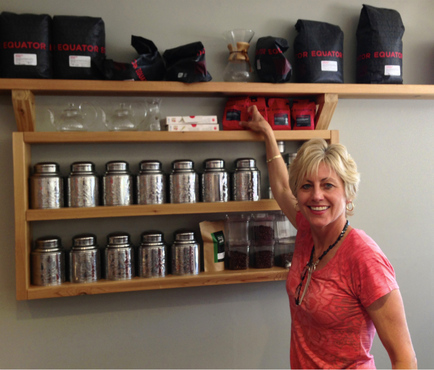
Congratulations to entrepreneur Helen Russell and Equator Coffees & Teas for winning the 2016 California Small Business of the Year Award!

Picture
Helen Russell, Co-Founder, Equator Coffees & Teas Photo: MattySF.com
Click here to read the award announcement.

Congratulations to artist Farah Yasmeen Shaikh, for worldwide press coverage on her dance drama about India’s most powerful woman!

Picture
Farah Shaikh, flourishing artist and creator of The Twentieth Wife Photo: Brooke Duthie
Farah came to Surf Life when she was at a crossroads as a dancer wondering how to make the leap from a trained student to making a career and living as an artist. We did a great deal of work on purpose and alignment together. Today, as a result of her hard work and courage, she is a now an accomplished artist with her own school who has also turned a novel about one of India's most powerful women into a full length work of art using dance, drama and storytelling - a great feat in finding her authentic voice in her art form and in life.

She says this about Surf Life: "Farhana helped me to break through the things that are holding me back and find the path to not just discovering, but living a life that is authentically me."  Click here here for artistic highlights of her show.


Click here for her press accolade.

Congratulations to architect John Lum and his firm, John Lum Architecture, on being featured in California Home + Design!

Picture
John Lum, Founder, Owner and Principal Architect of John Lum Architecture
Click here to read feature.
Comments

Growing Your Listening Skills Will Grow Your Leadership.  Here's How.

12/14/2015

Comments

 
Picture
I had a friend over for dinner the other week.  I just finished giving her updates on my life, how my recent trip back East went, what was hard, what was new.  After I finished, I was met with a “that’s good” type of response.  Not much more.  It was like talking into a well, with no feedback, affirmation, insights, commiserating … nothing.  Then, she launched into her updates, and I spent the remainder of the evening listening, supporting, ad-hoc coaching, and offering feedback to her on her relationships and challenges. 
 
Reflecting on the evening, I felt a little sad and, truth be told, a little used.  Why is it so hard for someone to listen thoughtfully and to let me know I’ve been heard?  I listened to her; why can’t she show me that she’s actively listening to me?  All of this got me thinking about what makes someone a good listener.
 
Let’s start with recognizing what it is to not listen well. 

 
You are quick to interrupt.

You are quick to hear someone and you generally interrupt them to offer a thought or response before they can finish what it is they are saying.  This shows you are not holding space to sufficiently take in what you hear.  Rather, you are already trying to craft an answer, rebuttal, opinion, or respond before fully listening.  Note:  if you are a coach, you may be taught to intrude for the purpose of keeping your client on track, but for the rest of you, you probably aren’t listening well if you continually interrupt.
 
You overshare.

You take up 80% of the space in your conversations.  You are concerned with expressing yourself and making sure you get heard but leave little room for others. 
 
You tend to multitask while someone is talking.

Unless you are knitting, walking, or doing something that takes unconscious competence to do, chances are you are not fully listening to the other person when you are doing something else at the same time.  It is impossible to be a good listener if you are typing an e-mail or reading the news on your phone.  The brain does not multitask; it can only do one thing at a time.  Although you may think you are successfully doing many things at once, in actuality your brain is switching back and forth from task to task and your attention is being divided.  

 
You self-reference.

You automatically apply what someone is saying to your own situation.  In other words, you don’t take the time to show you are understanding what they are saying and feeling.  Instead, you bring the conversation back to you and how you would feel if you were in their position.  This is different from empathizing with someone, as you are not genuinely trying to understand the other person’s feelings as much as you are projecting your thoughts and feelings onto their situation.
 
See any of these behaviors in yourself?  If so, you may have a great opportunity to grow your leadership skills by becoming a better listener.

 
In coaching, one of the first things we do is learn the 3 levels of listening.  Level 1 listening is all about self-referencing per the example above.  For example, if your friend says something, you immediately think of yourself and say, “Oh yeah, I remember when that happened to me."  In other words, it’s all about referencing what someone is saying in relation to you and your experience.  It’s not a bad level, per se.   It is the level we probably most often encounter in our relationships.  But it is not the most powerful level of listening. 

 
Level 2 is when you can actually start to listen to someone and stop referring back to yourself.  You really hear what it is they are trying to say.  You are focused on them and not on yourself.
 
And level 3 is about listening to all the things that are NOT being said, but that are present in a conversation - the energy of the person, their intonation, what you are hearing between the words, what your intuition tells you. This is where you as a leader really have the power to achieve deeper understanding and, ultimately, effect better outcomes through listening. 
 
Here are some tips for achieving level 3 listening:

 
1.  So what I’m hearing you say is … 

This is a great phrase that sets you up for an attempt to understand and reiterate what it is you heard the other person say.  If you are listening well, you should be able to sum up what it is you think the person is trying to say.  You can also use other versions of this phrase, such as:  It seems like … I hear you.  It sounds like … Using any of these phrases will not only help you synthesize what you just heard, but will indicate to the other person that you are truly trying to understand what they are saying..

2.  That’s curious.  How did that make you feel? …

Being curious about what the other person says will help you listen better.  Asking them how something made them feel can help them reflect more on what it is they are saying and also give you another angle to understand what it is they are trying to say. 

3.  Simply ask those around you whether they think you are an effective listener. 


If it’s a “no,” or you get a wishy-washy response because they are afraid to tell you the truth, ask, “How could I improve?”  You’ll be surprised at what they say.  Maybe they will tell you not to interrupt so much when you didn’t realize you were doing that.  Maybe they need a nod or more eye contact from you.  Maybe they just need an acknowledgement of some sort.  If you don’t ask, you won’t know!
 
Challenge yourself in your next conversation: go in with the intention of listening and making the other person feel heard.  Challenge yourself to not respond, offer advice, or self-relate until the person is finished speaking.  See how long you can go just listening!
 
As you practice better listening, you’ll likely gain new insights about yourself and about the person you are listening to.  Getting curious while listening can prompt you to ask the right questions for solving problems and demonstrates that you are truly present in the interaction.  Most of all, growing your listening is growing your leadership.
 
Try these listening tips and leave a comment below about the differences you notice in your conversations!


Like what you read?  Sign up for my monthly e-news!

Comments

5 Signs It's Time to Move On

10/13/2015

Comments

 
Picture
When is it really time to move on?  People come to me wishing to make a transition, but sometimes what holds them back is they have not yet logically convinced themselves it is time to move on.  They can feel it in their bodies.  They know something is not right.  But somehow they use their mind to convince themselves otherwise.  So what are some ways to tell if it’s time to move? 

1.  When your misery of staying outweighs the benefits
 
Some people come to me for coaching and they incessantly complain about their company - the lack of integrity, their boss, their situation, their disdain for the meaninglessness in what they do.  BUT, they stay and often, they are miserable.  They stay because they have a kid in college, or another one headed there.  They don’t want to leave for fear of not finding another job soon enough.  So I ask them:  does the benefit of staying outweigh the misery they are feeling?  If the answer is no, it is time to move on. 
 
You do not do yourself any favors by staying, nor do you do your company any favors by staying either.  The move may take a thorough assessment and some coaching, challenging you to look at your limiting beliefs, doing financial projections for your transition (cash flow, monthly expenses) and the like.  But once you have come to terms with the feelings and start to see a logical path of how you can move forward, it is much easier to move on.  Think about whether your misery in staying outweighs your benefits.  If it does, what is your next step? 


2.   When you are flat lining
 
If you are no longer being challenged in what you do at work or on a project, you are flat lining.  We all need to feel like we are growing or are being developed and exposed to new thoughts, ideas and ways of doing something.  Flat lining is the feeling that you’ve hit your own glass ceiling, that you really don’t feel like there is a place for you to move up and to develop further. 
 
I remember speaking to one woman who was completely flat lining.  She just didn’t have enough work or challenge in her day, so much so that she’d take off in the middle of the day and go to yoga and have a nice leisurely lunch.  She was making a good salary and things weren’t horrible.  So her choice was either to figure out a way to feel more challenged or to figure out what could be next.  She actually felt GUILTY for taking a paycheck from her work because it didn’t really feel like she was earning it, though she was gainfully employed.  In her case, she chose to stay and was eventually put on more challenging projects.  However, if there were no change, she would have left. 
 
If you are flat lining and the place where you are isn’t terrible, think about what you would need to do to feel more challenged in your work first.  Oftentimes, a frank conversation with your boss can equip her with the information she needs to help you on your growth path to build new skills and gain new experiences. 


3.  When you know you are just not happy
 
I had the experience of having a very deeply unhappy employee at the organization I ran.  What did it do?  First, it caused a ripple effect.  It drove one of the other key directors out of her position.  (The #2 reason this director gave for leaving was due to the unhappiness of her co-director, which rubbed off on her in a negative way.)  Just as happiness is contagious, so is unhappiness.  If you are not happy, you risk making others around you unhappy. (Remember the mirror neuron effect?)   You do both yourself and your company a favor when you choose to leave and go to a place where you will inevitably be happier.  You win because you’ll be closer to what will feel fulfilling, and the organization will win because it will be free of your unhappy energy, which can seriously weigh down innovation and engagement needed to really drive results. 
 
It’s true that some people will be perpetually unhappy.  Sometimes it’s less of a function of your environment and more a function of the own internal work you need to do so you can be happy.  So when assessing this, ask yourself – am I unhappy because of something in my life, or some unresolved childhood issue I’m having that this situation keeps bringing up (feeling-wise)?  Or am I happy when I am out of this space but become unhappy only when I step into this space?  Pay attention mostly to what your body feels and you will get the best data to help guide you forward. 


4.  When your body starts to manifest chronic symptoms
 
They body never lies.  Period.  If you tune into what you are feeling in your body at any given time, you can tap into immense data of what a person, situation or organization gives you.  We have a physiological response to stress all the time – from hair loss, heart palpitations, chronic colds, and yes, even cancer.  When you are getting chronically ill and stressed out, take that as a sign that it is time to shift and change things up.  There are numerous studies now connecting our physiology to stress and our mental well-being.
 
One of the biggest developments in coaching has been using embodiment to work with people.  When we are communicating, 96% of what we are saying is communicated through our body.  Some neuroscientist believe that the heart knows first and knows best, sends information to the brain, where it gets interpreted, put into words, and where it often gets denied.  The brain often interprets the information incorrectly and shuts it down.  Research says the brain just justifies what the gut and heart want to do.  So, tuning into how your body is feeling may reveal more about a situation and it’s impact on you than cerebrally processing it.   
 
I remember my last few years of being an executive and I was sick almost monthly.  It was embarrassing sometimes to be at a graduation ceremony for our students and be blowing my nose incessantly due to a sinus infection.  However, the financial anxiety of money, cash flow and managing so many different strands of the organization weighed on me over time.  What I didn’t realize was that my body was speaking to me.  It was begging me to take a break.  I took a 4-month sabbatical during which time I never got sick and upon my return did not get sick for an entire year.  I did come down with a cold the last day we closed down the organization.  Go figure.  It’s important to start to understand and map how your body responds to stress, and to figure out what it is saying about where you really thrive.  Then you have an indicator for making healthy decisions for you.  We all react to stress differently and some people are more sensitive than others.  But make no mistake tuning into your body will give you a wellness of information on what to do in a situation.


5.  When you realize your values are at odds with where you are
 
This is a big one for folks.  Oftentimes when we feel dissonance in our relationship to something or someone, it is because there is a values clash.  What one party values is not what the other values.  It’s not to say one is right or wrong, but differing value systems can often be cause for a break.  The problem is when you do not realize there is a difference in value systems and you just resort to blaming and pointing fingers.  It’s important to say that this is what I value – integrity, honesty, small-scale operations, putting the client first – or whatever the value is.  Then see where the dissonance is and where you feel you are out of integrity with a value.  Perhaps there is a conversation that could be had in terms of how you could assist with bringing this value more into your work place or perhaps it’s just not possible as your value systems are just too at odds with your organization.  If this is the case, it is a good time to consider a move.  Again, if you are in dissonance and are unhappy with the structure, you either can make efforts to change it from within or leave if you feel like you cannot make a difference. 
 
So those are a few ways to tell when it’s time to leave.  How and when to leave is a totally different question, and one that needs to be dealt with on a case by case basis depending on the situation of your team or company.  Those aspects are just as important, if not more, than identifying when you should leave.  This will have to be a topic of another blog post to come. 
 
What were some of the signs that told you it was time to leave? 


Like what you read?  Sign up for my monthly e-news!

Comments

"Don’t give up if you are stuck.  You are on a path to learn a lesson about yourself."  Here's How to Get Moving.

9/8/2015

Comments

 
Picture

Two concerned parents recently asked me why their 40-something-year-old son was so stuck – why he never pursued a career, why he would start down one path only to stop.  They looked at me as if I could somehow provide them a magical assessment as to why this was the case.  What I told them was that it’s never an easy answer, and it’s an issue he needs to explore himself with curiosity and introspection.  That said, I had a lot to say about feeling stuck.  Many people come to coaching because the feel stuck but manage to find a way to move forward.

To start, “stuckness” is not always a choice.  For example, there are some psychological conditions which will physically deplete people’s motivation, making it very difficult for them to lead functional lives.  They don’t have much control over their situation.  But then there’s the other type of stuckness - the one we do have control over –  let’s call it situational stuckness.  So, why do we get stuck?  The reasons are as varied and numerous as the people who get stuck, but here are some of the common ones I’ve come across.
 

Some Reasons:


  • Fear - Fear can be paralyzing.  You are so afraid of failure that you will actually keep yourself from finishing something and moving forward with it, for fear you won’t be perfect at it, or won’t live up to someone else’s expectations (your parents’ expectations or even their your own).   With a very successful parent, you might feel so much pressure to live up to their success that you just shut yourself down from trying.  Motivation killed - period. 

  • Lack of Confidence – You no longer have confidence in your ability to succeed based on prior negative experiences where you felt that you failed.  Those experiences can cap motivation and keep you from moving forward because you simply don’t believe you can do it.  Your belief systems create your reality. 

  •   Have a Dis-empowering Narrative – You have a limiting narrative of yourself, one where you don’t see yourself as capable and able to succeed and be independent for numerous reasons.  This narrative is full of limiting beliefs. 

  • Lack of Courage – You know deep down inside you are not where you want to be, but you lack the courage to admit to yourself that you need help moving forward from where you are.

Any of these ring a bell to you?  If so, read on for ideas on how to get “unstuck.”  Sometimes, getting unstuck happens slowly over time as you build up the courage to take a much-needed step in your life, and sometimes it’s a sudden incident or internal shift, something that clicks, and then – wham! – you move!

What gets you moving:


1.    Finding Courage

People who know they are stuck and move out of it find the courage to admit that they are stuck – that they are not moving forward in their lives the way they want to.  Admitting that you are stuck is one of the single biggest steps that can get the ball rolling.  Be honest with yourself.  Admit where you are in your life, how it feels, and find the courage to ask for help, whether it is finding a mentor, consulting a professional (therapist, coach or otherwise) or just finding someone you can openly talk with about your feelings.  That is a great first step.

There is no easy answer on how to get unstuck.  It takes self-discovery, the courage to admit you are not where you want to be, the courage to take a step forward and to explore and get curious about what else might be out there for you.  The courage to name it.  This kind of courage cannot be pushed on anyone; it is something that stems from a deep well within us, a willingness to be vulnerable and to take a risk or unfolds from within over time.  If we’re too comfortable then we’re not going to make the move.


2.    Getting Outside Help

Coaching in particular is a methodology completely based on asking powerful questions, using intuition, helping people make sense of their feelings and helping people come to their own transformative moments they otherwise would not be able to access on their own.  Only through this type of process can one start to understand oneself and uncover what might be keeping them stuck.  If they remain stuck in the same place after working with a coach for 3-4 months, then our profession generally makes a referral to therapy or another counseling methodology, as there may be a deeper psychological issue at play that needs attention.  Sometimes, people require a combination of both therapy and coaching (and I have many clients that do or have done both). 

The important thing is to start looking outside of yourself for help.  This can be as simple as creating an accountability structure with a friend to help ensure that you are reaching your personal or professional goals.


3. Welcoming the JOLT (environmental, situational, mental or otherwise)!

Sometimes, getting unstuck requires a jolt, an unexpected one at that!  It can be an illness that comes into your life, forcing you into a different perspective, a relationship gone sour, or getting fired from your job.  Whatever the situation, take it as a sign that since you are not moving, the universe, God, spirit, or whatever you believe in, is intervening on your behalf.


4.  Changing and Believing in Your Narrative

I see clients who make tremendous progress within 3 months of coaching, taking baby steps towards stated goals, and feeling elated because they are finally moving.  They were able to clear a narrative out of the way that wasn’t serving them. Sometimes, they transform a negative narrative into a positive one.  For example, they take a negative narrative born out of what a former boss said to them and replace it with a narrative they discovered about themselves based on a transformative moment or experience. You inevitably want to create your future from an empowering narrative, else you are just creating a future based on a narrative of the past.  The first step is to know what your narrative even is, and then get help changing it if it is not serving you. 

If there is one thing I’ve learned in my coaching, it is that, as human beings, we are very delicate.  I’ve seen some of the smartest, most competent individuals with amazing people skills and huge hearts just get stuck in a rat hole.  As one of my clients put it when she came to coaching: “I feel like a mole living under the ground.”  (Three months into coaching she now cautiously describes herself as a rabbit hopping about above ground.)


Don’t give up if you are stuck.  You are on a path to learn a lesson about yourself.    Something external or environmental may happen to shift you out of your circumstances, or sometimes anger and frustration can just push you to make a move.  Sometimes, you’ll muster up the courage to ask for help.  Just remember that you are not alone, and millions of people before you have felt stuck and have found a way to move forward.  You can get unstuck, too. 

Have you ever felt stuck on your path?  What shifted that allowed you to move forward, either externally or within? 


Comments

Feeling Down? Try This.

7/18/2015

Comments

 
Picture
Dealing with the highs and lows of change is inevitable.  I’ve seen competent executives with PhDs get moved to tears because they feel totally incompetent at what they are doing, entrepreneurs on an emotional roller coaster because they lost a good lead and their cash flow is screwed for the month.  I’ve also seen people in transition feeling really low because they were a leader and powerful professional at work, and now the people they once did business with won’t even call them back. 

And of course there is just the occasional funk, when you just don’t feel so great (like the one I was in last week).  We all go through our ups and downs, but how can we try to stay more “above the line” as we would say in coaching – in more resonant and positive emotions when we’re not feeling so great?  Here’s what I’ve learned along the way that I’d like to share with you.    


1.    Normalize Your Funk

The first thing to remember is that being in a funk is sometimes NORMAL.  I had lunch with a dear friend from high school who is now a Harvard-trained practicing neuropsychologist.  “What we forget is that it’s normal to have mood swings.  We need to start to normalize the fact that we have a range of emotions,” she’d say.  We can’t all be in a good, chipper mood all the time.  Unfortunately, in today’s society, our moodiness can make us quick to start self-diagnosing – maybe I’m bi-polar, maybe I’m depressed, maybe there is something wrong with me.  The truth of the matter is that we need to feel and be with ALL of our emotions.  So if you get in a funk from time to time, normalize it, for you are part of the animal kingdom!  

One of the principle points that celebrated psychology researcher Brené Brown makes in her TED Talk, “The Power of Vulnerability,” is that when we suppress our vulnerable feelings like fear, shame and disappointment, it makes it impossible for us to feel the positive ones - like joy, gratitude and happiness.  (Side note:  if you are convinced you feel no emotion, you ARE suppressing your emotions.  Get help accessing and feeling them!)  Seen the new Pixar move Inside Out yet?  Remember at the end when Joy, after trying to keep Sadness from “touching” any of the core memories, finally lets Sadness “touch” some of them?  It’s because she realizes that sadness is a necessary emotion to the human experience.  If sadness is suppressed, joy cannot be felt.  So, embrace your funkiness.  What I mean by that is to feel it.  Be with it. 

2.    Celebrate New Wins

Unfortunately, our brains are velcro for negative experiences and teflon for the positive experiences.  So when we have a negative experience, we tend to hold onto it.   

Oftentimes, clients tell me of their wins for the week at the beginning of our conversations and then leap to all of the problems and what’s going wrong.  They don’t dwell on their wins, elate in their wins, spend time with their wins.  By not doing so, they compromise the benefits of sitting with a positive experience and what it can do for their brains.  This is why they say you have to deliver 5 or 6 pieces of positive feedback for every piece of negative feedback.  It’s the teflon/ velcro thing. 


There have been days in my business where I have felt really low in terms of my progress.  As an entrepreneur, I want everything done yesterday.  When I can sit down and actually list all the accomplishments I’ve had at the end of the day, or in a week, I automatically feel lifted up.  When I focus on all the things I didn’t get done, I feel inadequate and like I am wasting time, which can lead to me to feel stressed and worried.  So, when possible, focus on your wins.   If you search for the positive experiences and spend time with them, you train your brain to identify more positive experiences in the future.  This is not to say you will not feel down about things, but training your brain to stay in your wins longer will make you more resilient for dealing with setbacks, processing feelings and then getting back on track!  (Note:  Studies show meditation is one of the ways to also build resilience among people who may be experiencing what we call below the line emotions.) 

3.    Remember Your Past Wins

This is a sports psychology technique that one of my good buddies explained to me last year.  When an athlete is down or disappointed from their performance, one of the ways to coach them is to get them to remember and recount their past wins.  This activates the memories and wiring they associate with competence, success and accomplishment, and can greatly shift their mental state.   

After closing C.E.O. Women, the non-profit I ran for 11 years, I initially felt pretty low.   I had very little confidence in starting a new venture.  At the time, I was working on setting up Brown Girl Surf, now a prominent, global women’s surf community.  I saw it as  sort of my “transition” work.  I remember how much anxiety I had around it.  In fact, much of my calls were around telling my coach all the reasons I wasn’t capable of doing the work for Brown Girl Surf.  I believed that I had to be a good executor.  Unfortunately, one of the last colleagues I worked with convinced me I was terrible at well, almost everything I did (she even criticized how I closed the door in our office), and especially so in the skills of sequencing, planning and execution – traits often associated with the left hemisphere of the brain.  And the sad thing was that I actually LET myself believe her.  I ended up convincing myself that I wasn’t good at execution, that I had done a lousy job starting and growing the organization, that I didn’t hire right.… the list went on and on.  I'm sure this wasn't her intention (and this was before I understood how we project ourselves onto others to avoid responsibility) but the more she complained and placed blame on others for the challenges and shortcomings she faced, the more my morale fell.  I forgot about all the things I did do right, the execution that went really well, and all the awesome hires that we did make throughout the year. 

My coach at the time listening to me struggling and challenged my thinking.  She asked me, on a scale of 1-10, how I rated myself in terms of executing at C.E.O. Women all those years.  I know nothing was perfect and by all means I knew I had many areas in which to grow, but I gave myself an 8 or 9, taking into consideration context - the little resources we had, and the fact that this thing grew out of my bedroom with just $1,000, with no executive board, no clients, and few connections.  At that point, I started to look at the bigger picture - the risks that were taken, the sacrifices that were made, and all the positive wins and successes my team and I had during that time as well as all the learnings along the way.  It wasn't perfect but it made me feel like if I did all that at C.E.O. Women, I surely could build the Brown Girl Surf community.  It also reminded me to always look at the bigger picture and context; one person putting down your skills should not negate all of your past wins or create mental blocks for future ones. 

(By the way, today Brown Girl Surf is co-led by myself and Mira Manickam, another awesome leader. We have almost 3,000 global followers, have been covered in international media, and just got our first $40,000 grant to support programming for adolescent girls in the San Francisco Bay Area that will foster a more diverse and inclusive surf culture locally and around the world!  And, our short documentary on India's first female surfer just got picked up by a MAJOR media platform and will be featured next month to its 8 million viewers around the world!) 

4.    Connect with Others

Ever wonder why solitary confinement is used to punish people?  The absence of connection - someone to talk to, someone to be seen by, is like slow death for the brain.  There are a few things needed to have a healthy brain, and one of those is connection.  Our bodies are directly impacted by our connection to others and to the outside world. 

When women are down or go through a hard time, they may be more prone to look to connection to help lift them up.  Sometimes the same is true of men, but more often than not, they will retreat to their man caves.  This may be a necessary process.  However, at some point connection and processing is important and can help lift you out of a funk if you’re in one.  A simple phone call, going out to dinner with someone, or inviting them to go out for a coffee can dramatically shift your mood.  For someone with anxious tendencies, talking with a secure person can often help move them back to more stability.  As a coach, I do a lot of my work in isolation.  I have had to plan how to get enough connection throughout my weeks so I am not just doing coaching sessions on the phone all day.  I lead a weekly, in-person boot camp for executives in transition, make sure I get in surf time and connect with my friends on the break, do some face-to-face client meetings, and make sure I meet and talk to at least one new person a week.  If I’m in a funk, I notice my mood dramatically improves when I reach out and connect with my network and friends. 


5.    Self-Reflect

I once attended a women’s writing class every Monday.  The goal was to do our shittiest writing possible, and through that process, the nuggets within our psyches would emerge and we could craft them into powerful writing.  We would read each entry out loud to the group.  We could write about anything that was on our minds.  Some people wrote about their latest online date and getting picked up in a Maserati, while others had something to say about painful memories of being molested in their childhood.  What was profound about the experience was that it allowed us to self-reflect as well as be witnessed by a group.  Though it was a writing class, it sort of had a therapy-like effect on the group.  People heard you.  I would leave feeling so good, as if I had processed an experience and could better make sense of how to move forward from it. 

Today, I make journaling an almost daily routine, putting aside time to let the feelings pass through.  As a Co-Active (Co-Active Training Institute) coach, we are trained in something called process coaching.  The theory behind process coaching is similar to Buddhist philosophy, in that when we have an emotion but do not feel it, the energy of the emotion becomes stuck or blocked inside us.  Layers upon layers of blocking can build up.  One thing we do as coaches is help our clients become present to their lives, to get them to FEEL their lives.  By doing so, we take them down into their emotion to feel it so they can open up space for forward movement.  I LOVE process coaching.  It’s a highly unique approach to coaching, but hands down one of the most powerful approaches I’ve learned. 

Fortunately, everything I preach I practice as well, and these are some of the techniques and learnings I share with my clients, whether they are moving into a new executive position, feeling the setbacks of starting their new business, or just feeling sad.  Know that it’s normal.  And also, sometimes just a good cry can do a brain good.   The sooner you FEEL your emotions, the sooner will pass them through.  Train your mind to see your wins and focus on them.  And give your brain the connection and self-reflection space it deserves to function optimally in service to your best life!

Comments

What Adolescent Heartbreak Taught Me About Transition

6/8/2015

Comments

 
Picture
I had such a crush on this guy when I was growing up.  I was 15 at the time and he was two years older than me (which is a big age gap when you’re a wee teen).  We would talk on the phone for hours about anything and everything.  He had asked me on our first conversation who I liked, in that cheesy, teenager sort of way.  Without giving it much thought, I said I liked him.   He said he also liked me.  These calls were a kind of fantasy space for me.   I had girlish dreams that one day I’d marry him and live happily ever after in a house with a white picket fence in suburbia.  Until one day, he casually mentioned needing to go and get a tuxedo for his prom, along with a corsage for his date.  Unfortunately, the date was not me – it was another girl.  I was crushed.  My first real rejection in love. 

I stopped talking to him, spiraling into a confused state, wondering what all those months of long phone conversations had meant and where I now stood with him.  I turned my feelings of rejection into moping around my room for hours on end, finding pathetic solace in Chicago’s Greatest Hits, feeling completely sorry for myself.  I felt like the poor, heartbroken victim and could empathize with all the narratives of shattered love strumming melodiously from my double deck cassette player.  My best friend at the time played the rescuer, commiserating with my victim-hood, trying to help me make sense of it all, empathizing with my feelings, and allowing me a space to talk things out.  Though well-intentioned, this paradigm bled into months of feeling crappy and unresolved about the whole issue, and trying to figure out ways to get him to like me as much as I liked him.  It also didn’t help that I was a teenager and had to contend with the added elements of raging hormones, a still developing brain, and plots to subvert the parental empire that was designed to protect me from getting mired in such drama in the first place.  After all, I should have just been studying, playing soccer and volunteering at summer camp.

When we’re in conflict, it’s easy to get caught up in the age-old victim, perpetrator, rescuer paradigm. In this model, there is always a perpetrator wronging someone.  There is always a victim, or the person being wronged.  And often, there is someone who takes the role of rescuer and comes along and tries to fix everything.  This is a common relationship paradigm and is often referred to as the dreaded drama triangle (Karpman Drama Triangle).  The idea is when we are in conflict, we are taking on any one of these identities.  I mean, it happens even at the most basic level in our interpersonal interactions.  Oh, and roles shift within the drama triangle too.  Someone can start off the rescuer and then fall into being a victim etc… 

But what if we could shift this paradigm?  What would be possible for us then during difficult transitions, in our relationships and in our lives? 

One day a coach I was working with brought to my attention a most interesting diagram.  It flipped this paradigm on its head from drama triangle to what is called The Empowerment Dynamic.   In this paradigm, the victim becomes the creator, the perpetrator the challenger and the rescuer becomes the coach.  When I learned about this paradigm, something clicked in me.  I started to think about all the situations in which I felt victimized, and imagined instead creating my way forward from them.  To put it in neuroscientific terms, it was as if a new neural pathway started to fire in my brain!  Suddenly, those situations where I was feeling sorry for myself because something didn’t go as planned, looked different.  Right away I could see the traps the old framework set up, and I started to recognize some of the narratives I had that kept me stuck instead of moving forward.      

Looking back on my first bout with heartbreak, I have to wonder: What if I had the ability to simply re-frame this situation?  Instead of seeing my crush as the one who did me wrong, what if I could have seen him as a challenger, and see myself as someone who could create my way forward in this – be my own rescuer?  How empowering and different an experience this might have been for me.  For example, I might have started being curious and created some questions to ask him.  Maybe, “Oh I’m curious – why did you take her to the prom and not ask me?” Or maybe I could have spoken to him and created the space for a kind friendship to ensue in the future, one that wouldn’t necessarily warrant talking on the phone for hours on end.

I didn’t realize it, but at the time, I was being challenged to set boundaries, get clear on my feelings (a skill that would become so important to me later in life), and to step out of my shyness into confronting one of the things I dreaded most – the feeling of not being worthy of one’s love.  I was never taught to communicate like this let alone share my feelings – when ever are we at that age?  Would I still have been as disappointed knowing I wasn’t the one?  Maybe so.  Would it still have been hard?  Yes.  Would this have even been possible at the tender age of 15, with a barely developed brain (remember the adolescent brain doesn’t fully develop until our mid-20s’, and in some cases it takes until age 30)?  Who knows?  But it would have built a new neural pathway for me to practice getting clarity, a skill which would eventually prove to be extremely valuable in all of my future communications, whether personal, romantic or professional.  When things are clear, at least you can heal and set your own direction forward for freedom.  I also probably wouldn’t have fretted so much, feeling like I fell short in some way.  I might have began to understand my worthiness and might have even gained a good friend.

So what if we could cut the teenager out of us, whose delusions of love didn’t go as planned, and see ourselves as creators in conflict instead?  Rather than stay stuck and hurt in a situation that didn’t go the way you wanted it to go, how do you create forward movement?  Or, I guess the more powerful question is: What narrative do you need to let go of that’s holding you back?  What’s the new narrative you dare to create?

Back to the teenage crush.  After a few years of not speaking, I ran into him when he was back home visiting from college.  Out of nowhere he apologized for his behavior, for not being up front and for the impact it had had on me.  I heartily accepted his apology, and it felt like such a relief to clear the air.  Looking back at this experience through the empowerment dynamic, where I’m the creator (and well, coach – the coach being the one who asks powerful questions and lets you figure it out on your own vs. saving you and solving problems for you) and he was the challenger, I can shift my narrative. 

Teenage heartbreak wasn’t about whether something did or did not materialize fully into something; it was about necessary experiences I needed to have in service to my full spiritual evolution. 

These are the type of experiences that would deliver lessons in understanding, non-attachment, forgiveness, and an even greater capacity for me to hold love for others and to realize my worth.  They were also necessary to help me eventually understand the qualities I needed in others that would bring out the best in me. 
Being disappointed early in life is fuel for learning, and gives us the opportunity to reflect and to set ourselves up for greater success the next time around. 

We will always face challenges on our journey, in our transitions and in our relationships.  We may not have power over what happens to us.  But we do have power over our own personal narratives and how they are framed.  We can keep one narrative and be stuck in it, or we can choose to re-frame it.  I guess that’s why victims of very bad incidents re-frame themselves as survivors.  There is something so much more powerful about that label, one that connotes an heir of creating and thriving as opposed to suffering and blaming.  


In my work as a coach, I speak to many people in profound transition – those who have gone through a tough divorce after 20 years of marriage, competent executives who have had painful and unexpected breakups with their employers, and those who veer off an old path to venture onto a new one, terrified that they aren’t going to come out on top.  When they turn to, “But it can’t work because of this …” or, “In the past, this is what happened …” and I sense that they are stuck, I challenge them to see themselves as a creator instead of a victim, and ask what part of their own narrative or limiting belief needs to be rewritten.  I don’t mean to say processing real feelings is not a necessary part of our work. It is in order to fully heal.  But once the feelings are processed, I ask,  “What would you want to create going forward?” and  “How would you do it?”  It’s surprising to see what new narratives emerge, the new insights, the new way of seeing things, and the gratitude for understanding the purpose in their greater spiritual evolution. 

Think about the narrative you might be living in now.  Where are you the victim, the perpetrator, or perhaps the continuous rescuer?  How would you rewrite this narrative as if you were the creator, challenger, or coach? 

I challenge you to do this.  I bet you’d be surprised at what you could create if you tried. 


Like What You Read?  Sign Up for My Monthly E-news!

Comments

4 Hacks That Saved Me in my Transition

4/16/2015

Comments

 
Picture
Transitions can be a time of rebirth, relaxation and renewal, as well as an opportunity for regeneration of new ideas and new ways of being in the world.  But let’s get real.  Transitions can also be a time of extreme financial hardship, emotional lows, ambiguity and just general suckyness.  Let’s face it - they are hard.  And what’s worse is when you feel like you are the only one who understands your world, that it’s impossible to bring others around you into it.  It can be a very lonely place.  So, I wanted to share with you some helpful things I’ve learned being in the trenches of transition.  Remember, I’m an entrepreneur who transitioned into my own business with very little savings (and had to dip into my fair share of retirement money).  I’ve had my ups and downs, and still sometimes experience them. 

I’ve learned to cope under stressful situations in the best way I know how, and have managed to create helpful processes and resources that made a world of difference in my transition.  I hope these help make your transition a little easier on the soul too! 


1.    Institute a self-reflective process

Whether it is through prayer, writing, meditation or art – whatever modality you choose, find a process that will allow you to reflect on past experiences, or even on your day!  It’s not uncommon to wake up in your transition feeling dazed and confused, wondering how to approach your day.  I guarantee you that if you start each morning with a meditation practice or give yourself some mental space to reflect, you will feel better.  And there’s some science as to why reflection is important.

When we have an experience, the memory of it lives in a certain part of our brain.  When we reflect on it, the memory of it moves to a different part of the brain.  This is the part of the mind that allows us to use the experience to make greater contextual decisions about our lives.  It is also just a great exercise in general to spend 20 minutes each morning quieting your mind.  In fact, I recently signed up for a 21-day meditation experience with good ole Oprah and Deepak.  I know it sounds cheesy, but I can honestly say that it made a huge difference to create the self-reflective time that the program prescribed, and I am often recommending this program to my clients as well. 

Start with a self-reflective practice as the first “to do” in your day.  Another hack you can add to this is to identify the dominant feeling you want to feel for the day, as well as 6 things you want to get accomplished that will make you feel the most productive and happy.  It will help set the course for your day, and will also help give you a daily “north star” during your transition. 


2.    Spend time focusing on what it is you are grateful for

It can be hard to feel grateful sometimes during transition, especially when the future seems like a big unknown.  Whether it’s losing a job, going through a divorce, or healing from some event that did not make you feel so good, rather than dwell on the narrative you feel got you into this position, focus some attention each day on what you are grateful for in your life. 

During my transition out of the non-profit organization I founded, very few people around me knew what it was really like to be in my shoes, and whenever I’d go home, the first question my father would ask me was, “What is your plan?”  I know he meant well to ask this question, but after the tenth time, I wanted to scream,  “Leave me alone!”  One of the things I decided to do with my parents was to share with them how completely present I was being with the day-to-day. I sent them daily texts about what I was grateful for on that day.  (This also helped divert their attention from being so focused on my future to being present with me in my day-to-day.)  I would get the sweetest texts back from them about what they were grateful for.  Most of the time it was the simple things - a good meal, company, companionship.  It was a great exercise for all of us in being grateful and present in the now.

There are tons of studies that show that the practice of gratitude is good for our health and for reducing stress.  I encourage the people I work with to write a list each morning of the things for which they are grateful and reflect on these things.  And even if you are not in transition, this is a great exercise that will help you approach each day with a positive outlook!


3.    Get your full financial picture in order

I facilitate Boot Camps for executives in transition in collaboration with a colleague of mine (Christy Haley Stover of the Platinum Resource Group).  In one of the four weeks we meet, we invite a financial planner to come in to talk with our participants.  I can’t tell you what a difference it makes for people!  One of the most nerve-racking aspects of being in transition, especially when you aren’t earning, is the feeling that you don’t have enough.  But with careful planning and using the right financial tools, you will be surprised by just how long you can go on the resources you do have.  What I’ve seen is that people often don’t take the appropriate time to really map out their financial picture, and to understand exactly how much of a cushion they have. 

If you haven’t done so already, get a monthly budget in order.  Separate it by your fixed costs and your variable costs.  Your fixed expenses are the expenses you have every month that remain the same - mortgage, cell phone, insurance, car payments, etc..  (If you don’t have a good template for this, I do – so ping me and I’d be happy to share it with you!) This will give you a sense of how much you need each month to stay afloat.  Also, do small things like call your cell phone service provider, cable company, car insurance provider and just let them know you are in transition and that you need to lower your bills somehow.  You’d be surprised how much I’ve been able to negotiate with vendors on bills.  It’s their business to keep you as a customer, so don’t be shy about asking.  Consult with your financial advisor as well.  They can help you figure out how to plan and manage your money through your transition.  

Then, it’s perhaps most crucial to make a cash flow plan – this is actually one of my favorite tools.  It is useful when looking at how much money you have in the bank against your monthly expenses, and whatever else might be coming in as income for the rest of the year (gifts, unemployment, alimony or whatever).  It allows you to plug in numbers and project out months so you can see what cash you will have left in your account each month, and conceivably, how many months you can last on what you have.  (If you are a business owner or entrepreneur, then you should be familiar with this tool.)  Having this tool along with a monthly budget and sense of your expenses will help ease some of the stress.  What you don’t know does hurt you when it comes to finances.

4.    Give yourself permission

Lastly, give yourself permission to be one thing and do one thing during your transition.  After a major transition, it is not uncommon for people to find themselves in what’s called a neutral phase.  It can often feel like you have no momentum, you’re directionless and unproductive.  Fear not.  It’s just nature’s way of easing you into the next phase of transition.  Imagine a plant that has been uprooted from the soil.  Its roots are no longer planted, so imagine what that must feel like for the plant.  It has nothing to latch onto.  It needs to find new soil to rest in, or the plant needs to be re-planted, or maybe new seeds need to go into the ground – you get the gist!  The same is true in the neutral phase.  So, go easy with yourself. 

What I recommend to my clients is to come up with one way of being that they want to grant permission to themselves to experience during their transition.  If you want to be a little lazy, give yourself permission to do that.  If you want to feel energetic and active, focus on that.  Then, come up with one thing you want to give yourself permission to DO.  If you want to sleep until 11 a.m. on some days, allow yourself do that.  If you want to eat Cheetos and watch Doogie Howser, M.D. re-runs all week, by all means, give yourself permission to do that (just don't do it for the rest of your life, please!).  The less permission we give ourselves to be in these non-productive states, the more guilt we will feel, and the worse we will feel during our transition.  So, be kind to yourself because sometime being unproductive is a necessary step to figuring out what next steps to take and what seeds to plant.  In short, show yourself a little compassion.

These are a few hacks I’ve instituted along the way.  I hope you find them helpful.  I’m curious, what hacks do you or did you institute during your transition?  I’d love to hear your thoughts!  Share away!


Like what you read?  Sign up for my monthly e-news!

Comments

4 Tips for Managing Performance on the Fly

1/13/2015

Comments

 
Picture
The other month I delivered a talk to a group of 50 some people at a large technology company.  The executive that preceded me had gone over her allotted time in the presentation.  Unfortunately, the moderator did not make up for lost time in the Q&A session. As a result, I found myself having to cram an hour-and-20-minute presentation I had so carefully planned into 50 minutes.  Yikes!

Moreover, after the executive presented, half of the audience got up to get food, and some people left.  I went from feeling excited and prepared to feeling rushed, uneasy and nervous, wondering how I was going to fit everything in.  I actually started to feel like nobody wanted to listen to me.  For a moment, I could feel myself losing my composure.  I knew my saboteur, that inner voice of criticism and negativity, was about to get the best of me.  Fortunately, I was able to self-manage and get through the presentation just fine.  Here are some things that helped me get through this unexpected situation with grace and ease.


1.    Put Things into Perspective

Rather than get annoyed at the way things were flowing, I had to pause and put things into perspective.  I reminded myself that there have been far greater offenses in similar situations, and to much more distinguished people in a much more complicated performance environment!  I had a flashback to world-class Indian artist, Pandit Chitresh Das* who I had the benefit of studying under for over a decade.  He once lost his entire microphone system during a major dance performance in India.  I watched as he was in the middle of a solo and his mic just shut off.  Despite him being in the middle of a composition and getting thrown totally off, he kept going (though he looked quite annoyed - who wouldn't be?), finishing his compositions until the sound could be restored.  Taking that lesson to heart, that’s what I did.  I told myself this wasn’t the end of the world.  It didn’t have to be perfect and, I should be nimble enough to go with the flow and improvise.  I also thought about surfing and the way the ocean has taught me this lesson thousands of times in it's ever changing, unpredictable way, often reminding me what a speck I am in the grand scheme of the world.  I started calculating in my head what I was going to cut.  I also got clear with what was most important in the moment: how I showed up, as my attitude and mental state would either make the talk or break it.  Putting things into perspective helped greatly in managing this snafu. 

2.    Prepare, Prepare, Prepare!

I continued my talk just fine.  I almost got through all of my slides when I clicked on the next one, only to realize none of my animated bullets made it into the master deck compiled by the company, which guided all my talking points!  Surprised and embarrassed,  I quickly grabbed my paper notes from the side and revealed verbally each point, one by one. 

Even with 15 years of public speaking experience under my belt, I can’t stress the importance of being as prepared as possible for whatever presentation or project you may be doing.  You just never know what will happen, and you want to feel comfortable enough with the content that you can improvise on it if you have to. 


For a 20-minute talk, I often put in hours of prep time, as I’m not a natural, on-the-fly orator.  I know my slides and points like the back of my hand.  I made sure I had backup notes, just in case the slides clonked out.  Instead of expending energy scrambling as a result of not seeing my bullet points on the slide, I put my energy towards grabbing my notes and presenting from there.  Though it wasn’t completely polished, it was fine.  And, I was able to get my points across with no problem, while still feeling confident in my delivery.  This would have been hard to do if I were less prepared.


3.     Get as Much Experience Under Your Belt as Possible

The more experience you have, the better you’ll be able to manage through unexpected bumps in the road.  For speaking, experience can range from presenting something to your roommate or friend or spouse, to presenting at a full-blown conference.  It doesn’t always have to be in the context in which you are doing your work.  For example, I taught dance for years.  Being in front of students and presenting to them absolutely contributed to the development of my public speaking skills.  So, get as much experience as possible.  The more experience you get, and the more the experience can mirror the conditions under which you have to perform, the more comfortable you’ll feel, and the better you will be able to manage on the fly.

When I was in high school, I was presenting an original oration at a forensics conference in Boston.  It was my first time speaking and competing in that particular division.  I felt so unsure and doubted my speech so much that I lost my confidence in the middle, and wasn’t able to finish it.  I just sat down, feeling a bit ashamed, embarrassed and defeated.  I was usually very comfortable speaking, but this was a new topic area for me, and I was out of my comfort zone.  After everyone had completed their orations, the judge came back to me.  He was kind, and gave me the opportunity to go back up on the stage and present, but I still did not do it. 


When I talk about gaining experience, I mean facing situations that you may not be able to get through at that time, but that will stretch you, and yes, even scare you a bit.   Contrast this story to many years later in my professional career when I’d find myself presenting in front of an audience of hundreds of women halfway across the world at a major women’s business conference (and getting paid thousands of dollars to do it).  Things went fine, but I would have never gotten there without both the positive and not so positive experiences under my belt.  Gaining that confidence takes time, and there can be some humbling experiences along the way.  But just keep doing and learn to appreciate the experiences, even if you don't come out on top for all of them.   Most athletes and artists get this at a visceral level (why they have a thing called rehearsals and practice), but what about taking that mindset to our professional work? 

4.    Know Your Purpose

During the unexpected bumps in my recent talk, it occurred to me that I could stay rigid to the way things were SUPPOSED to go and, as a result, fall apart or complain when they didn’t go as planned (this is a very left-brained way of seeing the world).  Or, I could swing over to the other side and allow for a little possibility, a characteristic associated with right-brained processing.  

On my way down to the talk, I was in a funky mood.  I decided to close my eyes and did a meditation on the plane.  I focused on my breathing and imagined a heart with a chocolate ice cream cone in it (hey, I was taught as a kid to meditate on ice cream cones throughout my martial arts training.  It stuck so it’s fair game in my book.  The point is to keep your mind focused on one thing).  This was followed by a vision of what I call ninja love – spreading love through the sending of hearts all around me, in the shape of heart discuses.  I know it sounds strange, but this is just what came to me.  It was through this meditation that I connected with my purpose for the day.  The content was important, but more than anything, I realized I was there to inspire, and - I know this will sound woo woo - to spread love.  I realized that delivering a perfect presentation was far from the point.  The point was all about how I showed up in relation to the people I would meet and what intention I had for them in the moments I was able to connect with them.  The more relaxed, centered, connected and focused I showed up, the greater impact I’d be able to make with my words. 


No matter what the chaos, I truly believe that the attitude and energy we cultivate in our space makes all the difference.  This is not to say that it should have been all on me to make my talk successful.  In the end, I was able to debrief with their team and share with them ideas for how to better manage these events, as well as make a checklist of what I needed to prepare going forward, should I encounter a similar scenario.  Even better, the team members who organized the talk evaluated themselves, and they picked up on most of the hiccups so that next time, things could run smoother. Remember: there are no mistakes in life - just experiments with results as touted author, Gregg Levoy, says!

In the end, the participants were elated.  They were engaged, and we got very positive feedback on the event.  And that’s what mattered most. 


Performance is a complicated tapestry of inner mental work, readiness and practice. (Note: That’s a tweetable.  Tweet away!)  Improvisation always needs a solid base.  When things don’t go as expected, we need that base and mental readiness to move forward, whether we are an athlete, motivational speaker, or performer. 

What strategies and techniques do you use to manage your performance when unexpected glitches happen?  I’d love to hear your thoughts in the Comments section below!


Picture
*Pandit Chitresh Das completed his spiritual journey on earth, and recently passed at the age of 70.  He not only left behind a legacy of timeless teachings in his craft, but, in my opinion, a way of thinking - patterning the minds of those he touched deeply, equipping us with skills to manage through the ups and downs of the unexpected.  There is no way to memorialize his legacy in this short blog (nor is that the point of this post), but he was the first person who came to mind when sitting down to write on this topic, so I just went with it.  He will be forever missed. 

Like what you read?  Sign up for my monthly e-news!

Comments

Founder Transitions: 6 Things You Need to Know From a Founder

12/10/2014

Comments

 
Picture
I recently coached a non-profit executive about two years away from an impending transition out of her non-profit organization.  After understanding structurally where the organization was at and how she envisioned her exit, there was a part of me that wanted to yell, “Are you f*&%ing crazy?  You can’t do that!”  However, being the refined coach that I am, ;) I was able to maneuver with grace and ease through the conversation and drop some knowledge on the matter.  I was surprised, actually, at how much knowledge I had acquired around transitions.  I decided to take off my coaching hat (which allows me to view the client as the expert of his or her own life) and drop some hardcore advice.  Really, I just wanted to see my client avoid the pitfalls and be as successful as she could be during the transition out of her organization.

Thinking more about our conversation inspired me to write this post.  Below are 6 things I think you REALLY need to know about Founder transitions.  I always tell my clients that transitions can either be well thought out and smooth with sufficient planning.  The opposite outcome is that the shit can hit the fan and force the transition.  And then there’s the happy medium of in between.  No matter what path you face on your transition, I hope these points can serve to help make it smoother and more productive for all involved. 


1.  Get Clear on Where YOU Stand First   

Remember that 80’s song by The Clash called ‘Should I Stay or Should I Go’?

Should I stay or should I go now?
If I go there will be trouble
An' if I stay it will be double
So come on and let me know…

This indecision's buggin' me (Indecisión me molesta)
If you don't want me, set me free (Si no me quieres, librame)
Exactly whom I'm supposed to be (Dime! ¿Qué tengo ser?)
Don't you know which clothes even fit me? (¿Sabes que ropa me quedar?)
Come on and let me know (Pero tienes que decir)
Should I cool it or should I blow? (¿Me debo ir o quedarme?)


If you find that those lyrics really resonate with you, you know what it feels like to be a Founder in transition.  Continue reading below, por favor.


When longtime Founders leave, there is no doubt that their absence affects the energy of the entire organization.  A big question to consider is what will happen to your business or organization when you leave.  Your options are to sell, merge, be acquired by a larger business or organization, hire a new leader or to close.  These are the options for all businesses.  Yet one of the most important things to do is to get clear first on what YOU want for yourself.

Once you are clear, you will be that much more effective in creating a plan and path forward.  If you aren’t clear, it will likely throw everyone else around you off, and for some personality types, the ambiguity can be extremely uncomfortable.  So, do your research and know what direction you want to take first – WHEN do you want to transition?  WHAT do you want your relationship to the organization or business to be, if anything?  HOW will this happen?  You’ll be surprised by how much having clarity for yourself will help move the process forward for everyone involved.


2.  Create a New Generation

Remember that old Pepsi brand motto:  “Pepsi, the Choice of a New Generation”? Well, replace “Pepsi” with your business or organization name and that’s what we’re going for here!

The biggest thing you can set up for your business or organization preceding your exit is a generation of leadership and followers of your organization’s brand for which YOU don’t matter.  What you’re going for is Casper the friendly ghost; you want to get to the point where you are just a shadow of a presence in all things related to the running of the ship.  It’s as if you can step away and you’re irrelevant to the cause because nobody really knew you in the first place.  In other words, relationships and getting business (or grants or whatever) are not solely dependent on you, Casper. 


After 10 years running my organization, I took a sabbatical for a few months.  When I got home, I looked around and there were new volunteers, some new donors that knew very little about me and there were new clients that had relationships with the rest of the staff irrespective of me.  Sometimes, Founders take sabbaticals precisely to force organizations to build capacity to operate more independently without them.  For me, going away was the best thing I did for the organization; it forced it to start operating dependent only on mission - a more social justice aligned way of operating - and less on individual, charismatic leadership, - a more capitalist, business-centric philosophy of leadership. However, it may be different for you, depending on whether you are in for-profit, are an entrepreneur, have investors, etc

A colleague of mine founded and left her non-profit organization to a successor.  About 2 years after her exit, her husband went to one of the organization’s events and introduced himself as the Founder’s husband.  Everyone mistook him for one of the current leader’s husband, because nobody knew who the Founder was.  It was the best feeling for him and my colleague to be totally anonymous, after years of putting everything into the organization.  See?  The Casper principal applies to spouses, too!

In short, what you want to do is find ways to start stepping back while still keeping your vigilance, and allow people to enter the enterprise or organization without having to touch you, or know about you.  Start to spread your relationships out among staff, and if appropriate, the board.  Think about leaving a lasting philosophy rather than a permanent presence.  Create a new generation of supporters, customers and followers loyal to the BRAND and not to you. 

3.  Don’t Always be the PR Face 

As part of building a new generation, you will need to build others as the spokespeople for your business or organization.  For larger organizations with division heads, this may be easy to do.  However, if you have just one ship, chances are, things are funneling to you.

 As a Founder, you are always going to be a human interest story.  Don’t ask me why – the media loves Founder stories, especially if it’s the “was an underdog and found success” flavored narrative.  Enough!  Now, try to make your clients’ success the front of your PR.  This will help with the impending transition.

Identify other key staff people or board members whom you can point PR towards when being interviewed for the news or other publications.  If I could give you one piece of radical Founder advice it is this: if you are serious about leaving, don’t do ANY PR during your last year with the enterprise.  See how it feels, and see what other leadership and capacity emerges within the organization if you don’t do it. 


Note: the above advice doesn’t hold if you plan on transitioning into more of a branding role for the organization where you are positioned as a high level, critical thinker still affiliated with the organization.  This is also a model I have seen some Founders follow, as the business world thinks that sometimes the enterprise does better to have the Founder still affiliated with it.  If this is the case, you can be used very strategically to continue to forward the mission or business of the organization and remain the steward of some key relationships. 

4.  Make a Case for the Individual vs. Collective Good

This point especially applies to non-profit or social justice organizations.  One of the challenges these organizations face when they have a very corporate board is the lens with which the board views leadership.  Expect folks more attuned to a corporate model to view the CEO as the most important figurehead.  This is largely the model in start-up businesses where the board and investors sees themselves as essentially investing in the entrepreneur or Founder and, in some cases, the founding team.  While this is one model of leadership largely originating from market-based business models, it can be at odds with a non-profit that seeks a more collective culture and membership.  You can guide people through this friction, but it will take thoughtful narratives to carry people forward. 

You see, the problem arises when leadership fails to walk the board or team through understanding the nuances of different models of leadership, offering them a narrative of why leadership should start to become more collective vs. individualized for social impact organizations.  This may be hard for some folks to wrap their head around, as studies show that the brain is more prejudiced against things it cannot process or understand.  If the concept is a bit alien to your board members or team members, don’t expect them to have well-defined neural patterns to understand it.  They will always be prejudiced to their way.  So expect pushback.


I’ve seen non-profit executives especially pull their hair out struggling with a corporate board.  Sometimes, it is an issue of the executive not knowing how to craft a narrative that can bring the members along and reconcile conflicting value systems, or offer a logical framework as to why the organization is better off with such a value system.  Often, transitioning the board is about transitioning them to seeing your value system when it might be at odds with what they are used to.  If you want to be a skilled executive leader, you will need a narrative for this to guide the team forward without alienating the board. 

5.  Be Prepared for Founder’s Syndrome

It sounds like a disease, I know.  The good news is that it’s not, really.  If you have Founder’s Syndrome, you simply cannot see the organization or business functioning without you.  It may keep you from leaving or making healthy changes in services to your mission.  Another characteristic of Founder’s Syndrome is that you might want everything your way.  In other words, you cannot healthily detach. 

Don’t worry – not every founder suffers from this syndrome.  But be warned:  In some cases, be prepared for OTHERS to have Founder’s Syndrome – to think that things cannot possibly go on without you at the helm, even when you are confident they can, or to not want to listen to anyone else unless they are the Founder.  In such cases, you can do things to bring these people along, but also expect that they may drop off in the process or after you leave.  Inevitably, they are tied to your brand because of their emotional connection to YOU vs. the emotional connection to the brand, and it creates a slippery slope again for building a sustainable business or organization.    

When I announced my executive transition from the organization I ran for 11 years, there certainly was a degree of mental “drop off” from some members of the Board.  The thinking is, “if this leader is out, so am I”.  It’s not out of malicious intent, but rather a tricky phenomenon of organizational psychology – the imminent losing of faith that happens in an organization when a Founder decides to depart and there is no clear successor.

It was at that point I learned the hard truth about Founder transitions:  sometimes people are there to support YOU and not necessarily the organization.  There is a saying in Organizational Psychology: People leave people.  They don’t leave organizations.  It can feel like a stab in the heart when you’ve invested so much in an idea or a business, and you just want to see the work outlive you.


It is important to recognize what kind of board you have.  Who would still be committed without you there?  Who would leave?  Who would be neutral?  These are all important things to consider with a transition.

Understand that people will go through several phases of denial, then acceptance, (and maybe never accepting) and may very well decide to move on.  Change is never linear and can involve a process of accepting and rejecting, accepting and rejecting. Others can have Founder’s Syndrome no matter what state the organization may be in. 


A colleague of mine who founded a national non-profit had a successor already identified and sufficient capital in the bank to run the organization.  She still had board members say, “we might as well close” upon hearing her plans to exit, as they believed that the work could not go on.  Unfortunately, what is often missing in transitions is envisioning how an org can be BETTER after the Founder.  Everyone defaults to envisioning the worst, the crumbling and instability.  Almost 5 years later, this particular organization is stronger and thriving with its new leader, perhaps the real hero in terms of making impact.  Founder’s Syndrome is more a function of emotional connection and ties others have to you, the leader.

6.  DON’T Follow the Textbooks

Just like people, each organization and business has it’s own personality, rhythm and lifecycle.  Each one is unique.  There is a history and ecosystem as to how and why they do their work and how they historically achieved results.  Applying textbook ways of thinking about HOW a transition should ideally happen can be detrimental to your transition, especially when you might be facing time and resource constraints.

And here’s where a bit of brain science comes in.  Process thinkers (this thinking occurs in the left hemisphere of the brain) may often be fixated on a way of doing something to the point where they are so rigid, their behavior actually produces divisions in their following.  On the other end of the spectrum, you don’t necessarily want to fly by the seat of your pants and just feel your way forward, either.  Ideally, you want to be able to have some structure, but take into consideration the uniqueness of the organization or business, and honor the opinions and ideas team members have about how this transition could effectively happen.

If your vision for how a transition happens doesn’t fit the textbook version, it’s OK.  Perhaps there aren’t enough resources to invest in an outside consultant, or perhaps the resources should be better spent on coaching for you and your team to figure out the best transition plan for the organization.  Founding boards often aren’t independent enough to steward a transition without you, so it’s important to gauge where the organization is at, and to make the transition appropriate to where people are in the process.  Textbook thinking can overshadow the brilliance, knowledge, know-how and intuitive pulse you may have on what it is going to take to lead the organization or business to its next level, and the type of vigilance it needs in a new leader.

Your intuition is a result of using the most integrated right and left hemispheres of your brain.  Feel your intuition early, and feel it fast.  Be open to the intuition of others as well.  You may have experienced board members who have watched transitions occur in their own careers and have a gut sense of what needs to happen.  Just because you don’t have a drawn out process for it, doesn’t mean you lack the knowledge of what the best move forward is for your enterprise or organization. 

To sum it up, get clear on what YOU want to do first, and then start acting from the perspective of sustainability by instilling a collective philosophy vs. thinking of yourself as the leader.  Build the capacity of others, understand that change can mean two steps forward and one step back, and always trust your intuition - it can mean the difference between a healthy and smooth and timely transition vs. one wrought with challenges and difficulty.     


Thank you to Jane Leu, Award-Winning Serial Social Entrepreneur and Founder of Upwardly Global and Smarter Good, for her input for this post. 


Comments
<<Previous
Forward>>
    Picture

    Author

    Farhana Huq
    Executive & Leadership Coach | Creator | Global Explorer

    Archives

    June 2023
    April 2023
    February 2023
    January 2023
    April 2022
    March 2022
    February 2022
    January 2022
    May 2020
    July 2019
    December 2018
    June 2017
    May 2017
    April 2017
    February 2017
    January 2017
    May 2016
    April 2016
    December 2015
    October 2015
    September 2015
    July 2015
    June 2015
    April 2015
    January 2015
    December 2014
    November 2014
    September 2014
    June 2014
    May 2014
    April 2014
    March 2014
    February 2014
    January 2014
    November 2013
    October 2013
    September 2013

    Categories

    All
    Anxiety And Stress
    Career
    Client Success
    Coaching
    Entrepreneurship
    Founder Transitions
    Health And Wellness
    Innovation
    Leadership
    Life Coaching
    Management
    Neuroscience
    Personal Branding
    Self-Management
    Transitions
    Visioning

    RSS Feed

Copyright 2014-2026 Surf Life Executive Coaching
  • Home
  • Services
    • For Executives
    • For Architects & Designers
    • For Climate Leaders
    • For Soul Seekers
    • For Retreaters
  • About
    • About You
    • Benefits & Metrics
    • FAQ
    • About Me
  • Testimonials
  • Contact
    • Coaching Session Prep Form
    • Coaching Post Session Form
    • Post Engagement Coaching Check-In
  • Blog
  • Photos